

Electrospinning for Battery Separators and Energy Materials
Electrospinning for Battery Separators and Energy Materials
Electrospinning is widely investigated for lithium-ion battery separators, nanofiber-coated separator membranes, polymer/ceramic composite separators and energy-material R&D. This guide explains the technical design priorities, formulation variables, scale-up challenges and Inovenso routes for proof of concept, prototype development, pilot validation or equipment investment.

Technical overview: why electrospinning is used for battery separators
In rechargeable batteries, the separator is a porous membrane that prevents direct contact between positive and negative electrodes while allowing ion transport through electrolyte-filled pores. Its microstructure can influence safety, rate performance, electrolyte retention and cycle behavior.
Commercial battery separators are often based on polyolefin membranes. These separators are widely used, but advanced battery research continues to explore alternatives and modifications that can improve thermal stability, electrolyte wettability, ionic conductivity, dimensional stability or safety behavior. Electrospun nanofiber membranes are attractive for this purpose because they can provide interconnected porous structures, high surface area and tunable material composition.
Electrospinning can be used to produce standalone nanofiber separator membranes, nanofiber coatings on commercial separator substrates, ceramic-loaded composite membranes or functional multilayer structures. The correct route depends on the target cell chemistry, electrolyte, safety requirement, desired thickness, mechanical strength and manufacturing strategy.
Typical engineering goal
The goal is not simply to make a porous membrane. A useful battery separator must combine controlled porosity, electrolyte uptake, ionic transport, puncture resistance, thermal stability, electrochemical compatibility and repeatable thickness. For early-stage projects, the most important question is often whether the target membrane architecture can be produced reproducibly before moving toward cell testing and scale-up.
Interconnected porosity
Electrospun mats can form open, interconnected pore networks that support electrolyte uptake and ion transport.
Material flexibility
PVDF, PAN, PI, PMIA, cellulose derivatives and polymer/ceramic systems can be investigated.
Composite design
Ceramic fillers or coatings can be introduced to target thermal stability and wettability.
Scale-up sensitivity
Thickness uniformity, web handling, drying and defect control become critical when moving to wider media.
Energy application areas for electrospun nanofibers
Electrospinning is used across several energy-storage research areas. The most common application route is separator membrane development, but the same platform can also support electrode and functional membrane research.
Standalone nanofiber separators
Electrospun separator membranes can be investigated for high porosity, electrolyte uptake, ionic conductivity and thermal stability.
- PVDF, PAN, PI and related polymers
- Porous nonwoven nanofiber structure
- Electrolyte wettability studies
- Thermal shrinkage evaluation
Nanofiber-coated separator substrates
A thin nanofiber or ceramic-loaded coating can be applied to a commercial separator or support membrane to modify wettability, thermal behavior or surface properties.
- Coating on commercial separator
- Thin functional nanofiber layer
- Substrate compatibility screening
- Roll-to-roll coating feasibility
Electrode and functional material research
Electrospinning can also support R&D on carbon nanofibers, ceramic fibers, catalyst supports, solid-state electrolyte concepts and functional porous mats.
- Carbon nanofiber precursor mats
- Ceramic or hybrid nanofiber structures
- Porous electrode support concepts
- Post-treatment and calcination planning
Key design parameters for electrospun battery separator projects
Separator development requires coordinated optimization of porosity, thickness, wetting behavior, mechanical strength, thermal stability and electrochemical compatibility.
Formulation and process variables
Battery separator electrospinning is sensitive to polymer chemistry, solvent evaporation, ceramic dispersion, humidity, collection method and post-treatment conditions.
Nanofiber architecture options for battery and energy-material development
The required architecture depends on whether the goal is a separator membrane, separator coating, thermally stable composite or functional energy-material scaffold.
Standalone electrospun separator
A nonwoven nanofiber membrane produced directly by electrospinning for separator R&D, electrolyte uptake studies and cell prototype evaluation.
- PVDF, PAN or PI-based membranes
- Porosity and thickness tuning
- Mechanical and thermal validation
Nanofiber-coated separator
A thin electrospun layer deposited onto a commercial separator, nonwoven or membrane support to modify wettability, thermal behavior or surface function.
- Thin functional layer
- Substrate compatibility testing
- Roll-to-roll coating route
Polymer/ceramic composite membrane
Ceramic fillers or hybrid structures can be investigated to improve heat resistance, dimensional stability, wetting or other separator functions.
- Alumina, silica, titania or boehmite
- Dispersion and agglomeration control
- Thermal stability studies
Choose your battery separator development path
Inovenso can support energy-material projects through proof of concept, feasibility studies, prototype sample production, pilot validation or in-house equipment configuration.
Proof of Concept & Feasibility
For teams that have a separator or energy-material concept but need to test whether electrospinning can create the required morphology and membrane architecture.
- Polymer and solvent screening
- Ceramic dispersion trials
- Fiber morphology development
- Early membrane feasibility
Prototype Samples & Pilot Validation
For customers who need separator samples, coated membranes, composite mats or validation batches before investing in electrospinning equipment.
- Prototype separator membrane development
- Coated substrate sample production
- Pilot roll validation
- Scale-up risk assessment
Equipment for In-House Energy R&D
For laboratories and companies that want to develop battery separators, nanofiber-coated membranes or energy-material structures internally.
- Lab-scale electrospinning systems
- Needle and multi-nozzle configurations
- Climate and camera modules
- Pilot line scale-up route
Recommended Inovenso route for battery separator projects
The right route depends on your development stage, target membrane architecture and whether you need service work, sample production or an electrospinning system for internal R&D.
| Customer situation | Recommended path | Typical Inovenso support |
|---|---|---|
| I have a separator concept but no validated electrospinning formulation | PoC / Feasibility Service | Polymer screening, solvent selection, ceramic dispersion and morphology development. |
| I need prototype separator membrane samples | Prototype Sample Development | Nanofiber membrane production, coated separator trials and sample preparation. |
| I need to compare standalone vs coated separator routes | Application Feasibility | Route comparison, substrate compatibility and scale-up risk review. |
| I want to perform energy-material electrospinning inside my own lab | Lab-Scale Equipment | NanoSpinner24, NE300, NE200, NE100 or NanoSpinner Plus configuration. |
| I need wider validation or roll samples | Pilot Equipment / Validation | PE-300, PE-550, StreamSpinner550 or application-specific pilot configuration. |
| I am not sure whether service or equipment is the right path | Application Consultation | Review of target membrane, polymer/solvent system, substrate, thickness and scale-up plan. |
Recommended Inovenso systems and services for battery separator electrospinning
Battery separator projects can start with Inovenso R&D services, continue with prototype sample development and later move into in-house lab-scale or pilot-scale equipment.
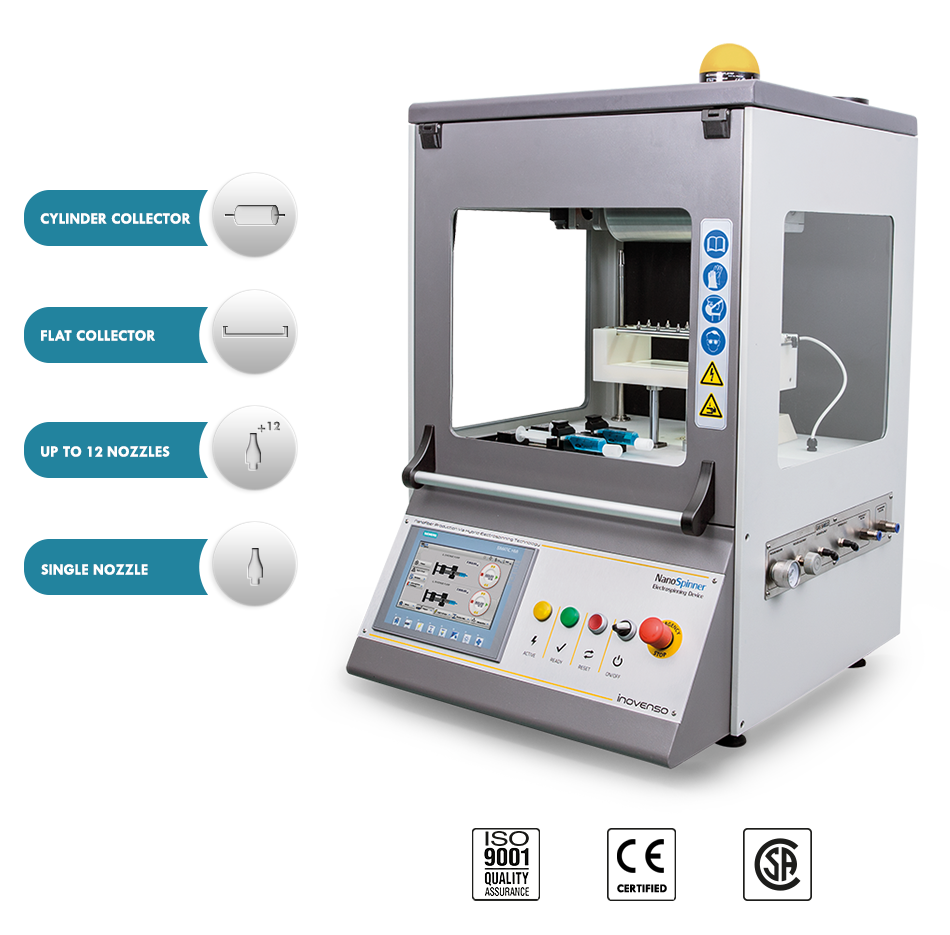
NanoSpinner24 and NE Series
For energy-material R&D teams developing separator membranes, coated substrates, polymer/ceramic nanofiber composites and controlled laboratory workflows.
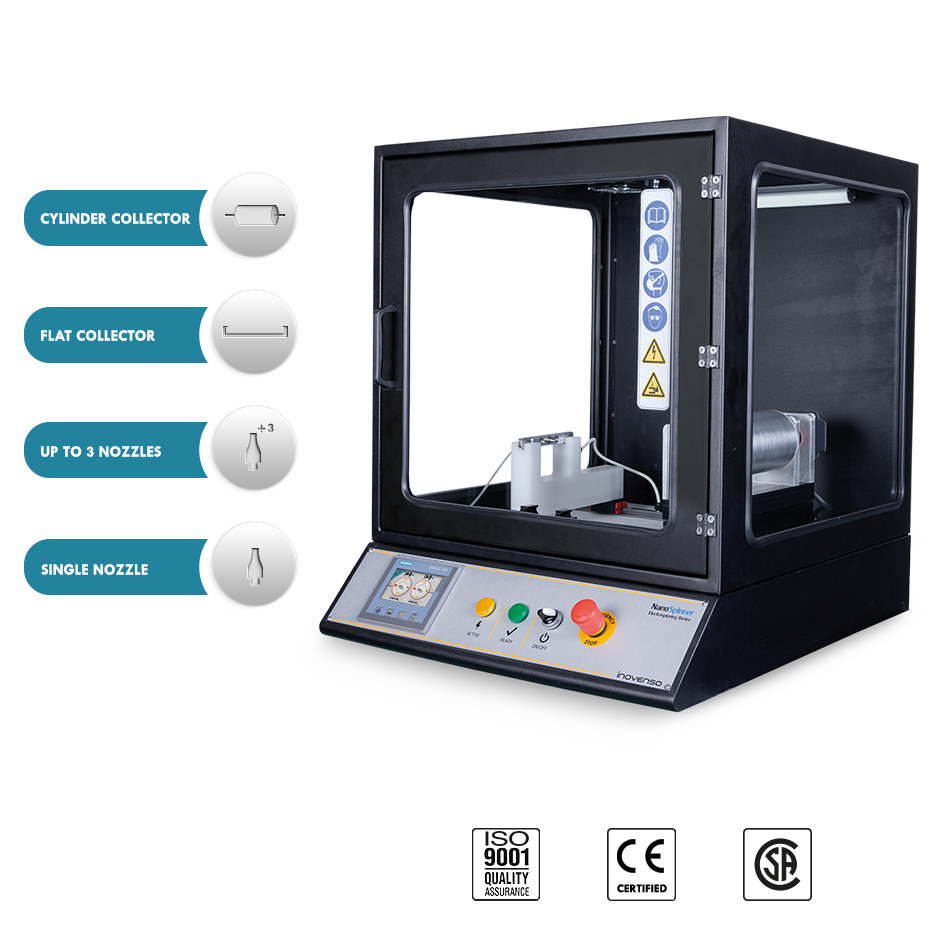
NanoSpinner Plus, NS1 and Starter Systems
For academic or industrial teams beginning early separator or energy-material electrospinning experiments with a compact and accessible configuration.

PE-300, PE-550 and Pilot Systems
For companies moving from lab coupon samples to wider separator membranes, coated substrates, validation rolls or pre-production nanofiber material development.

R&D, Prototype Samples and Application Development
For teams that want Inovenso to develop the formulation, produce proof-of-concept samples, validate nanofiber morphology or recommend a suitable equipment configuration.
Useful modules for battery separator electrospinning workflows
Battery separator and energy-material applications often require process control, substrate handling and repeatable morphology development. These modules can be considered during equipment configuration.
Temperature and Humidity Control
For repeatable solvent evaporation, morphology control, ceramic dispersion work and humidity-sensitive formulations.
Drum, Plate and Roll-to-Roll Collection
For standalone separator mats, coated substrates, wider samples and scale-up from coupon to roll media.
Camera and Process Observation
For documenting jet stability, deposition quality, defect formation and experimental repeatability.
A practical battery separator development workflow
A battery separator electrospinning project should move from material screening to membrane prototype, characterization, cell-relevant testing and a clearly defined service or equipment route.
Define separator target
Clarify cell chemistry, electrolyte, thickness, porosity, thermal and safety requirements.
Select materials
Choose polymer, solvent, ceramic filler, substrate and post-treatment approach.
Develop morphology
Optimize fiber diameter, pore structure, ceramic dispersion, layer thickness and membrane uniformity.
Create prototype samples
Produce standalone or coated separator samples for early characterization and comparison.
Plan validation
Define wettability, electrolyte uptake, ionic conductivity, thermal shrinkage and cell-relevant tests.
Select the route
Continue with Inovenso R&D service, request pilot validation or configure in-house equipment.
Selected technical references
The following external publications provide useful background on electrospun separators for lithium-based batteries, polymer/ceramic composite membranes, PVDF-based electrospun separators and coated separator systems.
- Sun X. et al., A review of electrospun separators for lithium-based batteries: Progress and application prospects, 2024.
- He J. et al., Electrospun PVDF-Based Polymers for Lithium-Ion Battery Separators, Polymers, 2024.
- Hwang Y. et al., Effect of a Polypropylene Separator with a Thin Electrospun Ceramic Nanofiber Coating, 2024.
- Ding W. et al., Batch Preparation and Performance Study of Boehmite-Based Electrospun Nanofiber Separators for Lithium-Ion Batteries, Molecules, 2024.
- Lee H. et al., Composite Membrane Containing Titania Nanofibers for Lithium-Ion Battery Separators, 2023.
- Di Carli M. et al., Preparation of Electrospun Membranes and Their Use as Separators for Lithium Batteries, Batteries, 2023.
Request a battery separator electrospinning consultation
Tell us whether you need proof of concept, prototype sample development, pilot validation or equipment recommendation for your battery separator or energy-material application.
- Battery separator and nanofiber membrane proof-of-concept studies
- PVDF, PAN, PI or polymer/ceramic composite feasibility
- Prototype separator sample development and pilot validation
- Lab-scale electrospinning system recommendation
- Collector, climate control and process configuration support
Start your battery separator project
Please share your target application, polymer/solvent system, ceramic filler if applicable, separator architecture, target thickness, current development stage and whether you are interested in services, equipment or both.
