Options For Electrospinning/Electrospraying Machines

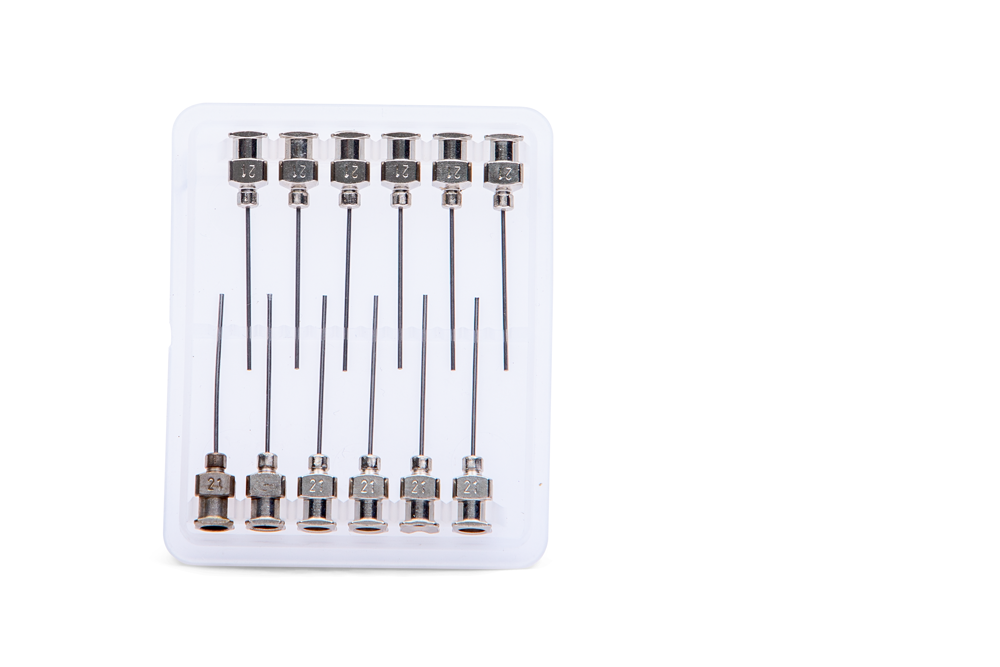
Different Diameter Needles

Different diameter needles offered by Inovenso Ltd assist researchers in utilizing electrohydrodynamic processes i.e., Electro spraying and Electrospinning according to their polymer and solvent properties. Diameter of a needle, more specifically the tip/orifice is the 3-dimensional region where the polymeric solution is accumulated. The polymeric solution protrudes from this region and accumulates here until critical applied potential is reached, and jet is formed and ejected from the surface of the accumulated polymer solution by breaking the surface tension.

Continuous/controlled process: Defining the correct diameter of the needle for a particular polymeric solution results in a continuous and controlled process.

Fiber diameter: The needle diameter/gauge number directly impacts the fiber diameter so the choice of needle diameter helps in achieving a given range of fiber diameter for particular applications.

Coaxial Needles

Coaxial electrospinning, also recognized as bicomponent electrospinning, is an innovative technique used to create nanofibers with a distinctive core-shell structure. In this advanced technique, two distinct polymer solutions or materials are concurrently spun through coaxial needles or spinnerets. One substance serves as the core of the nanofiber, while the other creates the shell. This method enables precise control over the structure, composition, and functionality of the nanofibers, making it exceptionally versatile for a wide range of applications.

gas shield electrospinng nozzle system

Gas Shield Electrospinning Nozzle System

The Gas Shield Electrospinning Nozzle System effectively delays the evaporation of solvents, which is particularly beneficial for solutions with fast-evaporating solvents. This ensures that the polymer solution does not dry prematurely, leading to a more uniform fiber formation.

Enhanced Fiber Quality: The controlled environment results in consistent and high-quality fibers, maintaining the integrity of the polymer solution throughout the process.

Versatility: Compatible with various gases such as air, nitrogen, or inert gases, the system can be adapted to a wide range of materials and processes.

Improved Process Efficiency: The stable solvent atmosphere reduces the risk of clogging and inconsistencies, leading to smoother operation and less downtime

Interchangeable Rotating Shaft Collector

The interchangeable rotating shaft collector is an adaptable rotating collector as a substrate that allows formation of thin tubular structures that can be used for applications such as veinous and arterial structures for biomedical applications or wirelike structures for providing material insulation/isolation.

Versatility: Different diameters shafts can allow formation of tube-like structures that can mimic various physiological areas addressing a range of applications such as heart valves and stents.

Aligned fibers: Fibers can be collected on this shaft collector at high rpm to achieve aligned fibers.

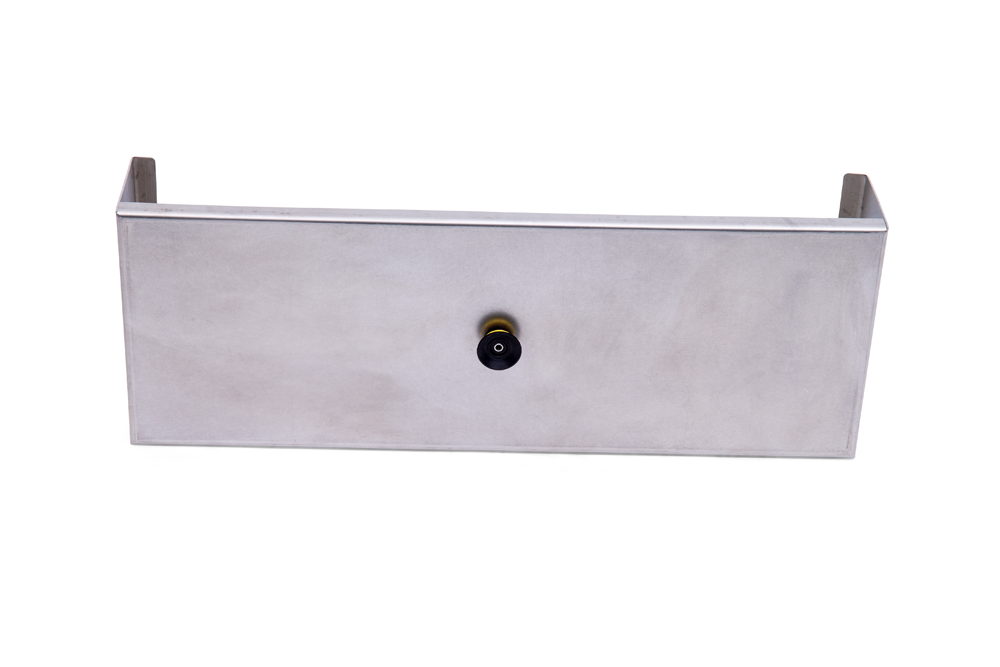
Vacuum Holder Plate Collector

The vacuum holder plate collector by Inovenso Ltd is a designed key component offering various advantages in the electrospinning process of rigid 3D structures. This option allows integration of a substrate of choice to the device’s collector side that needs to be deposited preferentially in the bottom up approach. The vacuum generated by the plate holder houses the substrate via suction mechanism.

Climate control (temperature / humidifier and dehumidfier)

Overview

The electrospinning devices proposed by Inovenso. Ltd allows a high level of flexibility to tailor fiber’s specifications. The environmental parameters impact the morphology and characteristics of the nanofibers. The influence of relative humidity and temperature during the electrospinning process on the manipulation of electrospun nanofiber’s mechanical properties was widely investigated for different applications due to the impact on the performance and efficiency of the produced material.

Relative humidity plays an important role as an environmental parameter during the electrospinning process as well as temperature and atmospheric factors. The correlation between electrospun nanofiber’s diameters and relative humidity is explained by the rate of solvent evaporation, in which a difference of solvent vapor pressure and partial pressure inside the electrospinning chamber is a served as pulse for solvent volatilization, this gradient inversely increases with the relative humidity.

Negative High Voltage Power Supply

The negative high voltage power supply integrated in the Inovenso Ltd. electrospinning devices offers an electrical polarity during the nanofiber’s formation and lead to enhance the quality of the mechanical and structural properties of as-spun nanofibers.

Due to the flexibility of the electrospinning/electrospraying process, it is extremely important to control all the parameters impacting the morphological properties of the nanofibers, in the typical electrospinning/Electrospraying process, negative high voltage power supply integrated in the Inovenso Ltd. devices are in the range of -10 kV for lab-scale machine to -40 kV for pilot scale and industrial scale machine and can be customized depending on the demand.

Camera

Electrohydrodynamic process has an advantage over other nanofabrication processes in its visualization feature. A lot of preliminary information can be deduced about the spinning process by looking at the Taylor cone and fiber jet behavior. To improve this deduction, high-definition visualizing camera by Inovenso for the Nanospinner machines aids in visualizing and understanding the electrospinning process further. More specifically, the optical visualization method is used to observe the Taylor cone formation process on the polymer solution surface, polymer jets and their stability and behavior throughout the whole electrospinning process. This visualization is also helpful in observing droplet formation in a bi/tri-component system and understanding the boundary between shell and core polymeric layers

Carbon Filter

Solution Electrospinning process requires dissolution of the polymers in an appropriate solvent. These solvents are usually organic in nature such as DMF, DCM, DMSO etc. and are hazardous if they are exposed to the environment in high amounts and for too long. To avoid this exposure to the electrospinning machine user and other members of the laboratory, the vapors formed after electrospinning need to be captured and disallowed to be released in the environment so that the air remains VOC (volatile organic compound) free. For this purpose, a carbon filter is used which can capture the VOC and ensure that clean air is circulated back to the environment.